Back to Management & Leadership
The Room Cost Factor: How Space Type Shapes Corporate Event Budgets
Written by: Tamara Siklosi
Tamara is a seasoned copywriter with a unique blend of legal expertise, business acumen, and a passion for writing.
Reviewed by: Keca Ward
As a seasoned HR professional with over 20 years of experience, Keca is an expert in various aspects of Human Resources.
Updated on June 16, 2026

Corporate event budgets often depend on more than the guest count. The type of room selected can affect rental fees, setup costs, staffing needs, food service, technology, and the overall flow of the event. For HR teams planning trainings, leadership meetings, recognition events, or company gatherings, choosing the right room type can help control costs while still supporting a strong employee experience.
Conference Rooms for Smaller Meetings
Conference rooms are usually the most cost-effective choice for small groups. They work well for interviews, planning sessions, team meetings, and short trainings. Costs are often lower because these rooms require less setup, fewer staff members, and basic technology. However, space can become tight if the meeting includes breakout activities, meals, or presentation equipment. HR teams should confirm seating capacity, screen access, and available outlets before booking.
Training Rooms for Learning Events
Training rooms are built for instruction. They often include classroom-style seating, screens, whiteboards, and space for materials. These rooms are useful for onboarding, compliance training, leadership workshops, and skills-based sessions. Costs may be higher than a standard conference room because the setup usually requires more tables, chairs, supplies, and technology support.
Ballrooms for Large Gatherings
Ballrooms are often used for award ceremonies, annual meetings, holiday events, and large employee programs. These spaces can hold more people and allow flexible seating arrangements. They may also require staging, microphones, lighting, linens, signage, and catering staff. Because ballrooms are larger, rental fees and service charges are usually higher. HR teams should ask what is included in the room fee and what counts as an added cost.
Breakout Rooms for Smaller Groups
Breakout rooms can improve larger events, but they add cost. These spaces are helpful when employees need smaller discussions, team exercises, or private sessions during a larger program. Each room may need seating, signage, screens, supplies, and staff support. The more breakout rooms an event uses, the more coordination is required. Clear schedules can help reduce confusion and keep the event moving smoothly.
Auditorium Spaces for Presentations
Auditoriums work well for keynote speakers, panel discussions, and company-wide updates. These rooms are usually designed for viewing and listening rather than group discussion. Costs often depend on audio needs, stage setup, recording, lighting, and technical staff. For larger presentations, HR teams may need to work with a technical production company to manage sound, visuals, and speaker support.
Read also: Corporate Headquarters As A Brand Statement: Using Design To Tell Your Company Story
Outdoor or Open Spaces
Outdoor areas can create a relaxed setting for employee events. However, they may require added spending for tents, seating, weather plans, lighting, permits, restrooms, and power access. These costs can rise quickly if the event needs backup indoor space. Outdoor spaces work best when the plan accounts for weather and guest comfort from the start.
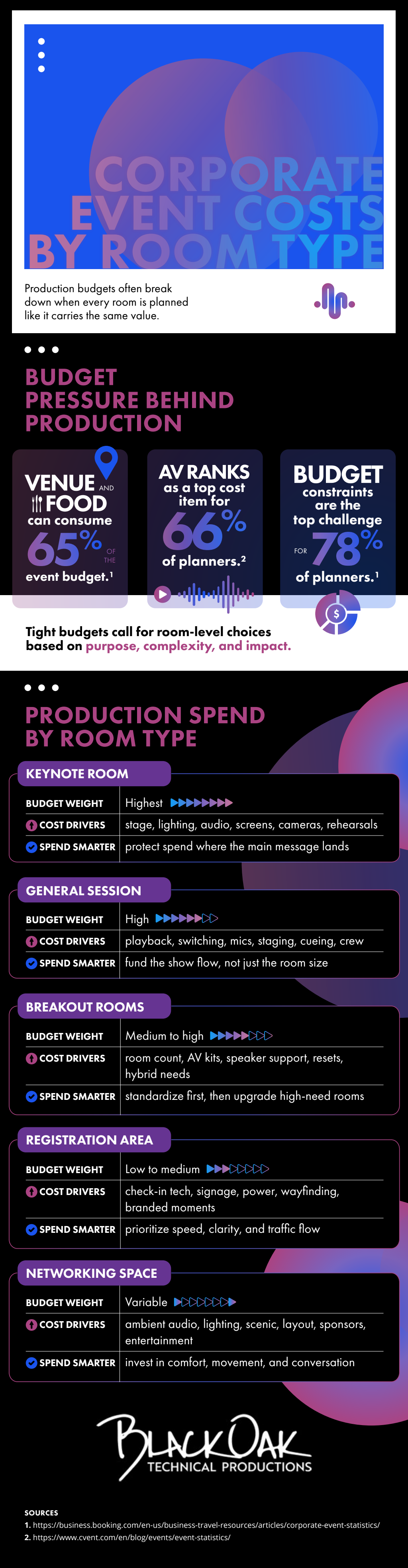
The right room type can make a corporate event easier to manage and more cost-effective. HR teams should compare room size, setup needs, technology, food service, and staffing before making a decision. A well-matched space helps the event run smoothly while keeping the budget focused on what employees need most. Look over the infographic below to learn more.