
Back to Management & Leadership
Rethinking The Break Room: How To Create A Space Employees Actually Use
Written by: Tamara Siklosi
Tamara is a seasoned copywriter with a unique blend of legal expertise, business acumen, and a passion for writing.
Reviewed by: Keca Ward
As a seasoned HR professional with over 20 years of experience, Keca is an expert in various aspects of Human Resources.
Updated on September 21, 2026
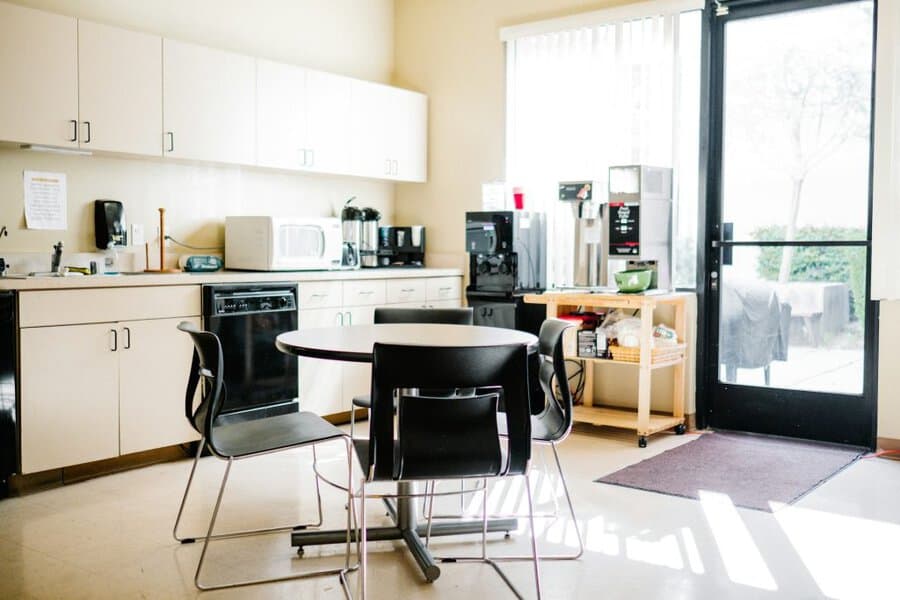
A break room can become one of the most overlooked parts of an office. The refrigerator fills up, the microwave creates a lunchtime bottleneck, and the tables gradually become overflow workspace. For HR teams, improving this area is less about decorating and more about removing small frustrations from the workday.
Start With How Employees Use the Room
Before replacing furniture or appliances, observe what happens during busy periods. A crowded refrigerator may be a bigger problem than dated cabinets. Employees waiting for one microwave can create unnecessary delays during a 30-minute lunch break.
Ask employees what gets in their way. If people regularly eat at their desks, find out why. The room may lack seating, feel noisy, or simply be too small for peak demand.
Usage patterns should guide the project. An office with staggered schedules has different needs from one where most employees take lunch at noon.
Fix the Practical Problems First
Appliances should match the number of people using them. Adding another microwave may provide more daily value than an expensive cosmetic update. Refrigerator capacity, water access, trash and recycling bins, electrical outlets, and food preparation space deserve the same attention.
Cleaning responsibilities also need to be clear. Decide who handles spills, expired refrigerator items, appliance cleaning, and restocking shared supplies. A beautifully renovated room will quickly become unpleasant if nobody knows who maintains it.
Coffee is another small detail that can create disproportionate frustration. If the office provides it, establish who monitors inventory and how frequently supplies are reordered. Some workplaces buy coffee beans online to simplify recurring orders, while others use a local supplier or office beverage service. The purchasing method matters less than preventing the 9 a.m. discovery that the coffee is gone.
Give People Different Ways to Take a Break
A break room does not have to serve every employee in exactly the same way. Some people want to eat with coworkers. Others need ten quiet minutes away from conversation.
If space allows, combine a communal table with smaller seating options. Avoid turning every surface into a workstation. Employees are less likely to disconnect if the room feels like another conference area.
Acoustics deserve consideration too. Hard floors, bare walls, televisions, and kitchen equipment can make a small room surprisingly loud. Upholstered seating or acoustic materials can reduce some of that noise without requiring major construction.
Build Maintenance Into the Revamp
HR should plan for what happens six months after the project is finished. Furniture wears, appliances break, and employee needs change as staffing levels or work schedules shift.
Create a simple schedule for appliance checks, deep cleaning, supply reviews, and employee feedback. Keep basic instructions near shared equipment if misuse is a recurring problem. Periodic observation can reveal new bottlenecks before they become everyday complaints.
A useful break room does not need luxury finishes or elaborate perks. It needs enough capacity for the people using it, clear maintenance expectations, comfortable seating, and a genuine separation from normal work areas. Look over the infographic below for more information.
