Back to Management & Leadership
How Strategic Partnerships Shape Growth From Startup To Scale
Written by: Tamara Siklosi
Tamara is a seasoned copywriter with a unique blend of legal expertise, business acumen, and a passion for writing.
Updated on April 24, 2026

Building a company from the ground up requires more than a strong idea. Teams must manage hiring, operations, and growth at the same time. Strategic partnerships help fill gaps and support steady progress. From early startup stages to larger operations, the right partnerships can improve how a business grows and how teams perform.
Early-Stage Support and Resource Gaps
Startups often face limited resources. Small teams handle many roles, which can slow progress. Strategic partners can provide access to tools, expertise, and networks that are not available in-house.
For example, a young company may work with an external recruiter to build its first team. This helps bring in talent faster while founders focus on product and strategy. Legal and financial partners can also guide early decisions and reduce risk.
Choosing partners carefully matters at this stage. Founders should look for groups that understand their goals and can adapt as the business grows.
Building Talent and Culture
As a company expands, hiring becomes more complex. Strategic partnerships can support human resources functions, including recruitment, training, and employee development. These partnerships help maintain consistency while the team grows.
External partners can also support leadership development. Coaching and training programs give managers the tools they need to lead larger teams. This helps maintain a healthy workplace culture during periods of change.
Expanding Market Reach
Partnerships also play a role in reaching new markets. Working with other businesses can open access to new customers and regions. This is especially important for companies moving from local to national or global operations.
Joint efforts such as co-marketing or shared distribution can reduce costs and increase visibility. These partnerships allow companies to grow without building every system from scratch. Clear agreements help both sides understand expectations. This reduces confusion and supports long-term success.
Managing Risk Through Collaboration
Growth brings new risks. Financial, legal, and operational challenges can increase as the business expands. Strategic partners can help identify and manage these risks before they become larger issues.
For example, financial partners may assist with planning and reporting. Processes such as LP due diligence can support better decision-making when working with investors or managing funds. These steps help maintain transparency and trust. Regular reviews of partnerships keep them aligned with business goals. This helps avoid problems that may arise from unclear roles or shifting priorities.
Supporting Long Term Scale
As companies reach larger stages, partnerships become more structured. Agreements may include service level expectations, performance metrics, and long-term planning. This level of detail supports consistent results.
Technology partners also play a larger role at this stage. Systems for payroll, performance tracking, and communication help manage larger teams. Strategic relationships with these providers support smooth operations.
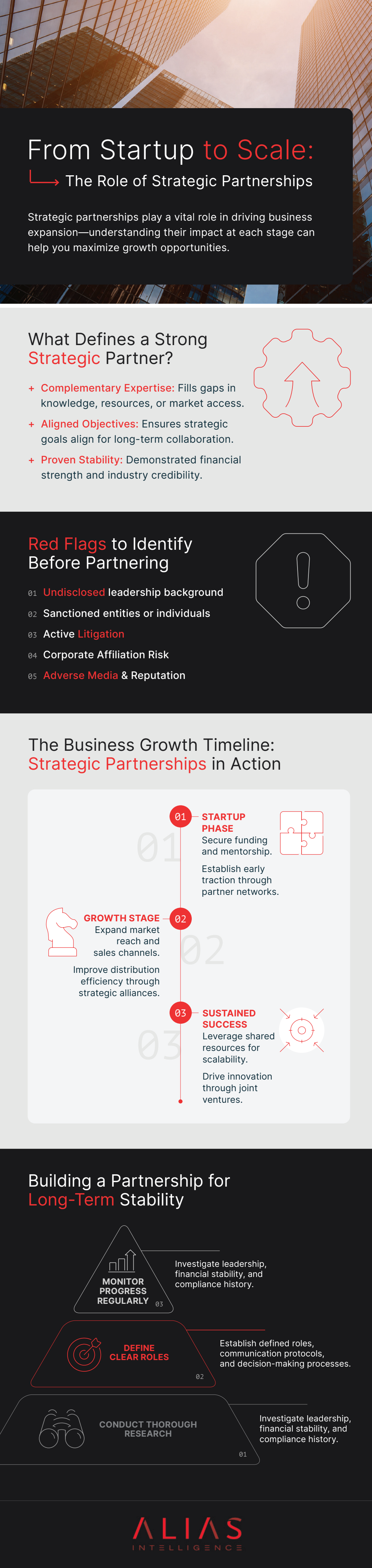
Strategic partnerships support growth at every stage of a company’s journey. They provide access to skills, resources, and support that may not exist within the team. With clear goals and careful selection, these partnerships help businesses grow while maintaining strong teams and stable operations. For more information, feel free to look over the accompanying infographic below.